Sunday, January 13, 2013

Mniums, Bryums & other wide-leaved ground mosses

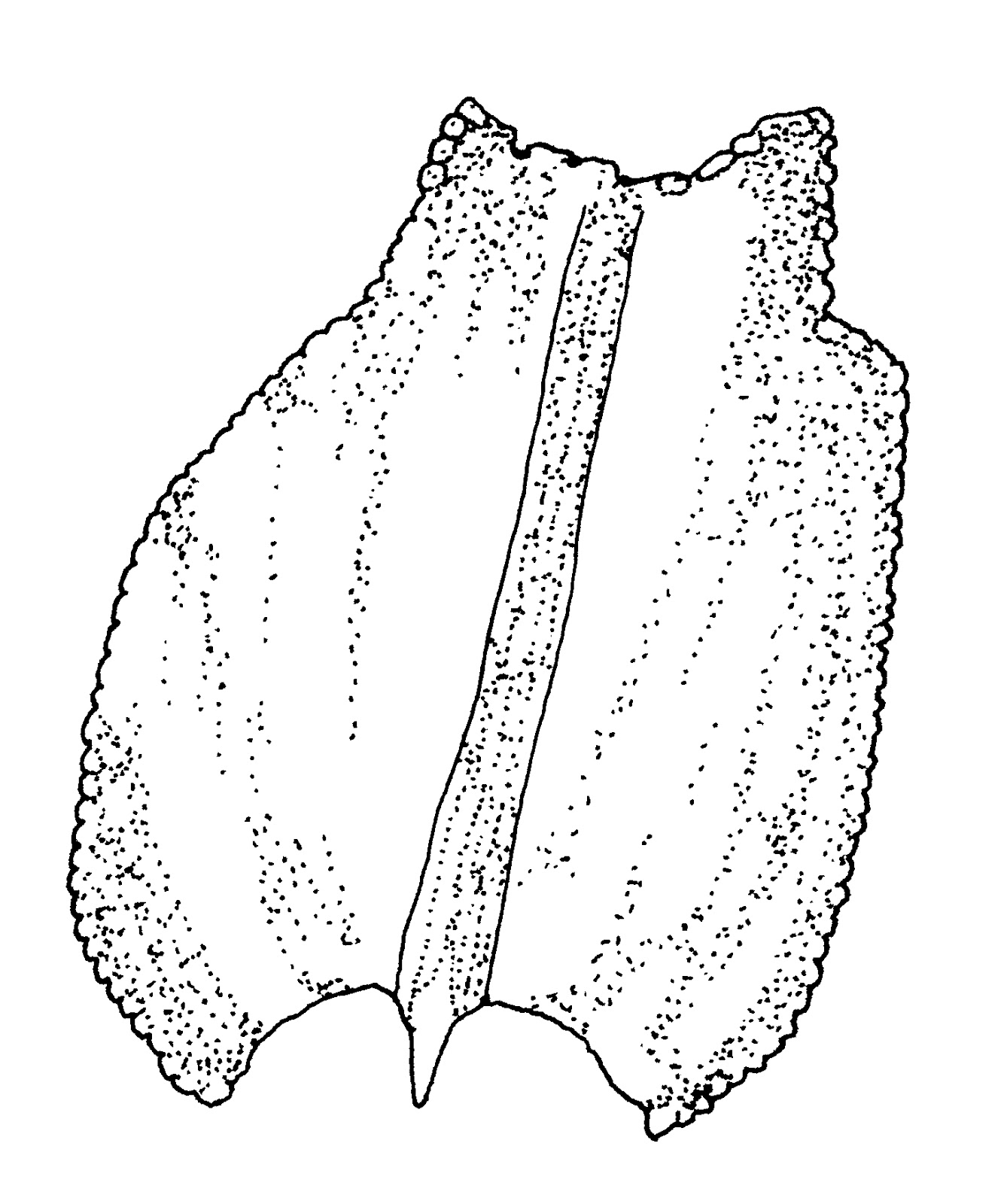
There are a group of mosses that grow on the ground in especially shady places...they have wide leaves which have short to long teeth.
below is a field key to some of our common wide-leaved mosses:


and if you have a dissecting and/or compound microscope, here are some of the microscopic features:


over the next few posts, i'll go into a little more detail some of the species...such as the differences between Mniums & Bryums..and how the Mnium family is split into three distinct groups: Rhizomnium, Plagiomnium and Mnium.

Saturday, January 5, 2013

Asexual Reproduction/Vegetative Propagation

 Mosses & Liverworts can reproduce by other means than spores. The asexual strategy is much faster and less costly than sexual reproduction and can enable bryos to colonize an area quickly which becomes very important in unstable environments.

There are three basic methods bryos use in vegetative propagation: Fragmentation, Gemmae & Propagules.

Fragmentation is exactly what it sounds like...parts of the plant, usually pieces of or whole leaves, break off and form new plants. Some species have taken this further and developed 'break zones' in their leaves which makes them extremely fragile and with the lightest touch, will break off. These fragments, on finding a suitable substrate, will then develop into protonema (that thread-like stage that looks like aglae) which then develops into the leafy shoots. Two examples are Dicranum viride and Haplohymenium triste:

Dicranum viride (note all the broken leaf tips)

One shoot of D. viride showing leaf tips

Dicranum viride leaf

Haplohymenium triste leaf showing 'break zone'
The production of Gemmae and Propagules take this a step further. Now the plant is putting slightly more energy into the production of structures specifically designed to grow either into protonema or directly into a leafy shoot. 
     
     Gemmae are structures, one to many celled, that are basically undifferentiated...they have no growing tip and will form protonema before growing into a plant. Many bryophytes have gemmae...the liverworts are especially fond of them. they can be one-celled round structures, 2-celled ovals, multicellular worm-like things, or stellate and they're often colored orange or red (especially in the Lophozias).

Blaisia pusilla, which grows in a very unstable habitat of open, moist soil..along ditches, etc, has two different gemmae. It produces scale-like gemmae on the ends of the thallus lobes shown below:

Blasia pusilla showing scale-like gemmae on thallus lobes

It also produces these crazy flask-like structures which house ovoid, several celled gemmae which are extruded through the mouth of the flask.

Blaisia pusilla flasks

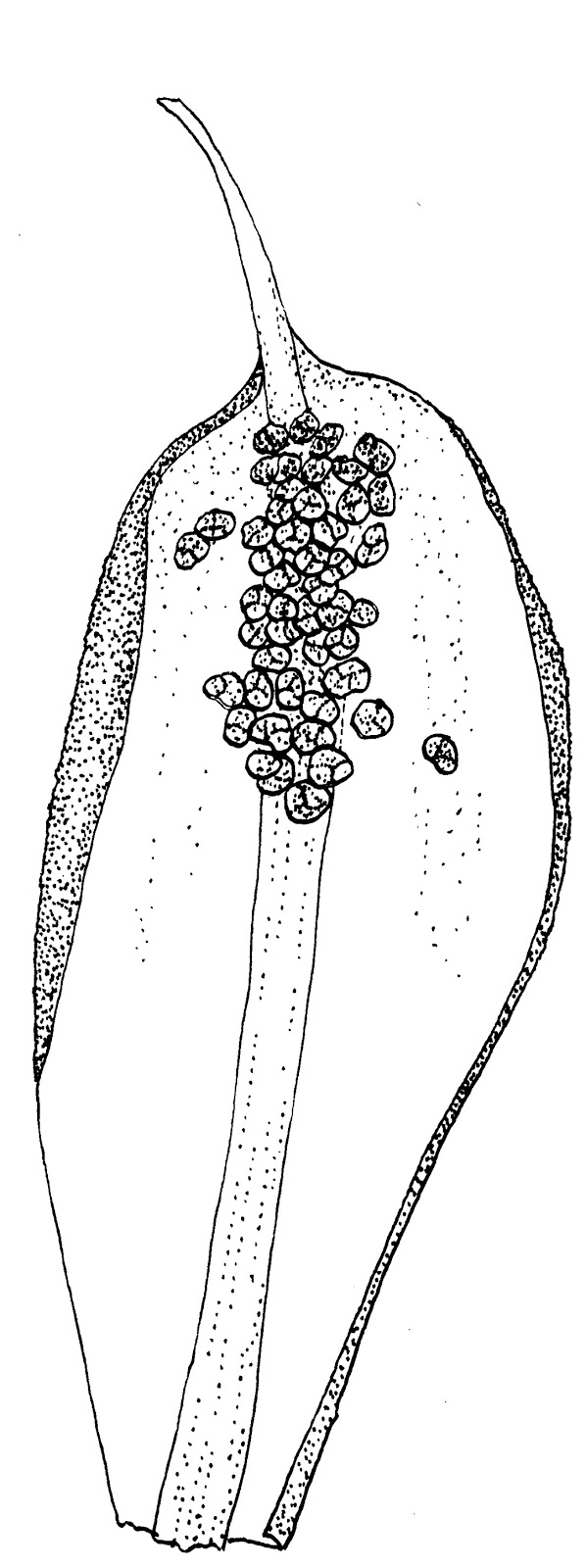
Tortula papillosa, has multicellular globose gemmae which are found right on the leaf surface:

This beautiful photo by Michael Luth, shows the gemmae on Tortula papillosa's leaves


A view of the leaf showing the globular gemmae clustered along the costa
Propagules are even further developed than gemmae, have a growing tip, and often can resemble small buds or miniature leafy shoots. these propagules can grow directly into a plant without going through the protonema stage.

Dicranum flagellare showing upright propagules which are very easily dislodged


Dicranum flagellare propagule -
note how it looks like a tiny plant with reduced leaves.

Many times the existence of gemmae or brood bodies is very helpful in determining a species. For example, Pseudotaxiphyllum elegans and P. distichaceum look very similar in the field...but if you looked at their propagules, they are easily identified:

Pseudotaxiphyllum distichaceum propagule
Pseudotaxiphyllum elegans propagule
So, whether by fragmentation, gemmae or propagules, mosses & liverworts have found an ideal way to reproduce successfully without going through the costly and iffy process of sexual reproduction.

Monday, December 10, 2012

Bazzania trilobata - a BIG leafy, liverwort

where Conocephalum is one of our largest thalloid liverworts, Bazzania is one of our largest leafy liverworts. this means that it has a stem and leaves and is much more 'moss-like' than the thalloid liverworts which are just thick or thin flattened plants without any differentiation into stems or leaves.  Bazzania is very common in moist forests especially cedar swamps. it loves old stumps, humic soil, but can also be found on rocks and tree bases. when it's happy, it can form large, loose repeatedly forked cushions.


the way the leaves curl down somewhat over the stem have always reminded me of a centipede-like creature. Each leaf ends in 3 triangular teeth.


Bazzania, like many liverworts has small underleaves...much smaller than the top leaves, and they generally have 4-5 teeth.


 It also produces long rootlike branches which arise from the base of the underleaves, which you can see in this wonderful photo by Michael Luth:


Some say that it has the smell of sandalwood, but i haven't noticed that myself...perhaps i'll check next time i'm hiking around the park trails.

Saturday, December 8, 2012

A BIG Liverwort

i haven't talked too much about liverworts, but they're no less deserving than mosses...Many of them are tiny and difficult to identify like the cephalozias..or somewhat bigger and harder to identify (i'm thinking Lophozias here). But there are a few that are very recognizable in the field....and Conocephalum conicum is one of our largest thalloid liverworts. It loves wet soil along streams, under ledges and over rocks next to waterfalls. It grows in overlapping, flat mats. It rather looks like green snake skin.


A close up of the thallus shows that it has little polygonal markings on the surface (which give it it's distinctive snakeskin-like appearance...and that in the center of each polygon is a dot. These dots are pores which lead into air chambers. Conocephalum is part of a group of liverworts that have a multi-layered, or complex,  thallus - small epidermal (surface) cells and larger interior cells. It is quite aromatic and emits a spicy-fragrant scent when the fresh plant is crushed.
   This liverwort is dioecious, which is a fancy word meaning that it has separate male and female plants. the plant above is male...you can tell by the small, brown circular patches at the end of the branches.
The next time you're in a wet area, look for this conspicuous liverwort.

Tuesday, December 4, 2012

Leucobryum glaucum - the pincushion moss

   The other little moss that was peeking out of the birch bark, which i didn't notice right away, was a little piece of Leucobryum glaucum. this distinctive moss was one of the first mosses i learned as it's easily identifiable.
One of the few mosses with a common name...it goes by 'Pincushion Moss' or even better...'Mother-in-Law's cushion'.  It can grow into quite large rounded cushions, large enough to sit on...and it looks ever so cushy and comfy...so, if you don't actually like your mother-in-law, you invite her to rest her feet and have a seat....what you don't tell her, is that this moss, like many of the sphagnums is really good at soaking up water like a sponge, so when you sit down on it, you will end up with a wet bottom.
  the thing that makes Leucobryum so distinctive, is also the reason why it soaks up water...it's leaf contains a great number of empty cells...The leaf has a midrib that is so broad that it doesn't look like a midrib at all anymore...it just looks like the leaf is thick and fleshy. When the plant dries out, it's color changes from green to a pale whitish green or light blue-green that is very distinctive.

a small clump of moist Leucobryum


Notice the color when it's dry

The cushions of Leucobryum are actually many separate plants all crowded together. the plants in the center of the clump continue to elongate which can make it form a nice hemispherical cushion.

this is a scan of a piece of Leucobryum taken from a large cushion

a Leucobryum leaf - the whole center is made up of a thick midrib
Leucobryum loves moist or even swampy woods and grows on humusy soil, often where stumps have completely rotted to the ground. Even though it prefers these moist areas, it can also be found in much drier areas as well. But almost always in acid areas.

Here is a nice patch of Leucobryum growing up next to McLeod pond in Colrain, MA.
Now, doesn't it look comfy to sit on??
Next time you're out in the woods, keep your eyes open for this lovely, common moss.

Monday, December 3, 2012

Hypnum imponens - the Brocade Moss

As i was hiking around the park trails the other day, i picked up this piece of birch bark...


i loved the little moss poking through the crack in the bark...as i looked closer at it, i noticed that there were actually two species, Hypnum imponens and Leucobryum glaucum, both of which are very common on the ground. It got me to thinking about how they came to be in that little piece of bark, and i came to the conclusion that the bark was growing close to the ground and as the tree was dying (or dead) the mosses grew up from the ground and through the bark.
   i've been noticing Hypnum imponens a lot over the past month...it seems to glow at the trail edges, maybe that's because there's so little green in the woods these days and one is less distracted. Commonly called 'Brocade moss' i think due to its usually neat, embroidered look. it can form extensive mats on old logs and humusy ground and likes it a little damp. This is what it commonly looks like:


it often has a very characteristic orange-brown color and a very neat arrangement of branches along the stem called pinnate (like a feather).


Like many in the Hypnum genus, it has very curly leaves which you would see if you turned the branch over...it looks smooth on top and somewhat bristly underneath (which are all the leaf tips curling under)

under side of branch tip

curved leaves - often called 'falcate-secund'
you can also see that it has no midrib or 'costa' to the leaf and something interesting is happening at the leaf base where it attaches to the stem. most of the cells in the main part of the leaf are quite long and linear...but the cells at the base are much shorter, even a little inflated. Those cells are called 'alar' cells and are often differentiated in many species of moss and are used as an aid in identification of closely related species.

so..closer up, these cells look like this:

in Hypnum imponens they are often distinctly colored orange-brown as well.
Look for this common species the next time you are out hiking!

next post, i'll take a closer look at the other species found in bark - Leucobryum glaucum

Monday, October 8, 2012

My own little foray

The Andrews Foray  was conducted on September 9... i was unable to attend and so decided to have my own little foray right here in town. i decided to go to two places that i hadn't been to in maybe 10-15 years.
the first was a powerline cut:

i had found Helodium paludosum here and wanted to see if i could find it again. (i didn't).
 Powerlines are great places to find disturbed soil bryophytes. Often, as in this one, they have wet areas too, where fun mosses can be found. The most abundant mosses were Polytrichum commune and Aulacomnium palustre. these two were very abundant on the banks.
Polytrichum commune

Aulacomnium palustre
Other bryos i found included: Ditrichum lineare (on muddy dirt), Trematodon ambiguus, Atrichum angustatum, Pohlia annotina & P. bulbifera, Leucobryum glaucum, Polytrichum pilliferum (hanging around rock edges), Thuidium delicatulum, Hedwigia ciliata, Plagiomnium cuspidatum, Callicladium haldanianum, Fissidens bushii, Atrichum cf altecristatum, Atrichum crispum, Hypnum pallescens, Hypnum imponens & H. lindbergii.
Trematodon ambiguus - note the LONG neck to the capsule.

  there was a little brook that ran across the access road and in this i found Scapania nemorosa, Fontinalis antipyretica, Sphagnum sp., Hygrohypnum sp., Racomitrium aciculare (covering the rocks).

But the most exciting species i found looked like this:
See that green fuzz on the left side of the mud crack? yup...that's it!

With my handlens i could see the tiniest of capsules, meaning i had found a nice fall ephemeral....but which one??? i was thinking ephemerum....but when i looked at it under the scopes it turned out to be Micromitriuim megalosporum - one of the tiniest mosses...it's capsules are round and inserted within the leaves.  It could easily be mistaken for algal growth. it often will be found on muddy soil when a pond recedes in the fall. I had only seen this species once - shown to me by Bill Buck, and now a new record for Franklin Co, Mass!

the second spot i went to was where an old beaver dam used to be, but was now mostly a sedge meadow.
The sedge growth was so dense that there was hardly any mosses at all. i had found Pohlia bulbifera here and was looking for it (even though i just saw it up on the powerline cut.)

i was lucky to find both Pohlia annotina and P. bulbifera:
Pohlia annotina

Pohlia bulbifera
Other bryos i saw included Bryum argenteum, Atrichum crispum, Dicranella heteromalla, and  Philonotis fontana. I also found some of the hornwort, Anthoceros punctatum, and also another small ephemeral which was puzzling to me. It looked sort of like Physcomitrium pyriforme except the capsule wasn't really very exserted, and that fruits in the spring anyway....and it didn't look like Pottia truncata either.
When i got it under the scope, it turned out to be a Physcomitrium - not pyriforme, but P. immersum - another new species for me and possibly new for mass as well....
So, all in all, a great mini foray for me!